
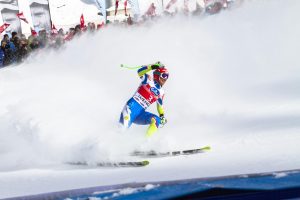
Every four years the Winter Olympic Games showcase some of the most exciting and physically demanding sports in the world.
Events such as Alpine Skiing at the Winter Olympics, Freestyle Skiing at the Winter Olympics and Snowboarding at the Winter Olympics push athletes to the absolute limits of speed, strength and control.
But with high speeds, aerial tricks and unpredictable terrain comes a high risk of injury.
As a BSc (Hons) Sports Therapist and MSc Strength & Conditioning Coach working with athletes, I often see similar injury patterns across winter sports. Understanding these injuries—and how Sports Therapists treat them—can help both elite athletes and recreational winter sport enthusiasts recover safely and return to peak performance.
Below are five of the most common Winter Olympics injuries and how Sports Therapists play a key role in rehabilitation.
1. ACL Tears (Anterior Cruciate Ligament)
ACL injuries are one of the most serious and common knee injuries in skiing and snowboarding.
How the Injury Happens
ACL tears usually occur when an athlete:
-
Lands awkwardly from a jump
-
Twists the knee during a high-speed turn
-
Falls while the ski remains fixed in the binding
These injuries are particularly common in Alpine Skiing at the Winter Olympics due to the combination of speed, turning forces and equipment mechanics.
How Sports Therapy Treats it:
Rehabilitation typically follows a structured process:
Early Phase
-
Reduce swelling and pain
-
Restore knee extension and movement
-
Activate quadriceps and hamstrings
Strength Phase
-
Progressive lower body strengthening
-
Neuromuscular control training
-
Balance and proprioception work
Return-to-Sport Phase
-
Plyometrics and jump training
-
Agility and cutting drills
-
Objective return-to-sport testing
Return to elite competition can take 6–12 months, particularly following ACL reconstruction surgery.
2. Shoulder Dislocations and Rotator Cuff Injuries
Shoulder injuries are common in athletes who fall heavily onto the arm during aerial sports.
How the Injury Happens
In sports such as Snowboarding at the Winter Olympics and Freestyle Skiing at the Winter Olympics, athletes often fall at high speeds, placing large forces through the shoulder.
This can lead to:
-
Shoulder dislocations
-
Rotator cuff tears
-
Shoulder instability
How Sports Therapy Treats it:
Physiotherapy focuses on restoring stability and control of the shoulder joint.
Key components include:
-
Rotator cuff strengthening
-
Scapular stability training
-
Gradual restoration of shoulder mobility
-
Progressive return to overhead movement
Strengthening the surrounding muscles is essential to prevent recurrent shoulder dislocations.
3. Wrist Fractures
Wrist fractures are particularly common in snowboarders.
How the Injury Happens
Because snowboarders have both feet attached to the board, they often fall forward or backward and instinctively put their hands out to break the fall.
This mechanism—known as a FOOSH injury (Fall On Outstretched Hand)—frequently results in wrist fractures.
How Sports Therapy Treats it:
Following immobilisation or surgery, sports therapy aims to restore full wrist function.
Rehabilitation typically includes:
-
Wrist mobility exercises
-
Grip strengthening
-
Forearm strengthening
-
Functional hand and weight-bearing exercises
For athletes, restoring load tolerance and shock absorption through the wrist is critical before returning to sport.
4. Concussions
Head injuries are a major concern in winter sports.
How the Injury Happens
Concussions can occur due to high-speed crashes or failed landings, particularly in events such as Freestyle Skiing at the Winter Olympics, Snowboard Halfpipe at the Winter Olympics and Ice Hockey at the Winter Olympics.
How Sports Therapy Treats it:
Modern concussion management involves active rehabilitation, not just rest.
Physiotherapy treatment may include:
-
Vestibular rehabilitation for dizziness
-
Cervical spine treatment
-
Balance and coordination training
-
Graduated return-to-exercise protocols
Athletes return to training through a step-by-step progression, ensuring symptoms do not worsen with increasing activity.
5. Ankle Sprains
Ankle injuries are common in sports that involve repeated jumps and landings.
How the Injury Happens
Athletes in Figure Skating at the Winter Olympics and freestyle skiing are particularly vulnerable due to repetitive impact forces and rotational landings.
How Sports Therapy Treats it:
Sports Therapy focuses on restoring stability and preventing future sprains.
Treatment often includes:
-
Joint mobilisation techniques
-
Resistance band strengthening
-
Balance and proprioceptive training
-
Plyometric progression
For elite athletes, rehabilitation must include sport-specific movement patterns before returning to competition.
The Role of Sports Therapy and Strength & Conditioning Coaching in Winter Sports Performance
Sports Therapy and Strength & Conditioning Coaching isn’t just about treating injuries—it’s also essential for injury prevention and performance optimisation.
Many elite winter athletes follow structured strength and conditioning programmes designed to improve:
-
Lower body strength
-
Core stability
-
Landing mechanics
-
Neuromuscular control
By addressing movement patterns and physical weaknesses early, Sports Therapy can significantly reduce the risk of injury on the slopes or ice.
The sports featured in the Winter Olympic Games demand extraordinary athletic ability—but they also carry a significant risk of injury.
Through expert physiotherapy, athletes can recover from injuries such as ACL tears, shoulder dislocations and concussions while rebuilding the strength, stability and confidence needed to return to competition.
Whether you’re an Olympic athlete or a recreational skier, the principles of Sports Therapy remain the same: restore movement, rebuild strength and return to performance safely.
For further support, please don’t hesitate to get in touch!